Shopping cart

Aluminum Auto Body Repair in Los Angeles

shape_2 1 1

Aluminum Auto Body Repair in Los Angeles

Modern vehicles are no longer made entirely of steel. From the Ford F-150 to Tesla, luxury sedans, and EVs, aluminum body panels are now standard across most manufacturers. But when your car suffers collision damage, you cannot take it to just any body shop. Aluminum requires specialized equipment, certified technicians, and different repair techniques — most shops simply aren’t equipped.

Our facility in Los Angeles is a certified aluminum collision repair center with dedicated aluminum repair zones, OEM‑approved tools, and factory‑trained technicians. We restore your vehicle to factory specifications — protecting its structural integrity, safety systems, and manufacturer warranty.

Certified Aluminum Collision Repair
Aluminum auto body repair is fundamentally different from steel. Aluminum has no “memory” — it doesn’t snap back. It’s heat‑sensitive, work‑hardens easily, and requires completely different welding, riveting, and bonding methods. We follow OEM repair procedures precisely, using manufacturer‑approved techniques for aluminum frame repair, panel replacement, and structural bonding. Ford, Tesla, BMW, and others state that aluminum repairs must be done at certified centers with OEM parts — otherwise, safety and the warranty are void.
Aluminum Welding & Rivet Bonding
Aluminum welding car repair requires TIG or MIG welders with 100% argon gas, different filler rods, and precise heat control — ordinary steel welding equipment will not work and will damage the metal. We also specialize in rivet bonding auto repair, which combines structural adhesives with self‑piercing rivets (SPRs). Many OEMs require rivet bonding instead of welding on aluminum panels because welding can weaken the material and requires extremely high power. Rivet bonding eliminates heat damage, preserves corrosion protection, and creates bonds stronger than the original metal.
Transparent Aluminum Auto Body Repair Estimates
Aluminum panel puller systems are completely different from steel dent pullers. We use capacitor‑discharge weld‑on studs or glue‑pulling techniques, not resistance‑welding systems for steel. Equally important, aluminum and steel cannot share the same workspace. Even microscopic steel particles introduced into an aluminum repair cause galvanic corrosion — a chemical reaction that silently destroys the repair over months. Our shop maintains fully segregated aluminum repair zones with aluminum‑specific tools, dust extraction, and measuring equipment.
Quality Guarantee
Aluminum auto body repair cost is generally higher than steel due to specialized tools, certified labor, and OEM parts. Industry‑wide, aluminum repair claims average $8,200 compared to $4,800 for steel‑bodied models. Minor dent repair runs $500–800, while structural **aluminum frame repair** can exceed $2,000–5,000 depending on damage. We provide detailed written estimates before any work begins, work with all major insurers, and fight for OEM parts — not aftermarket substitutes.

What Is Aluminum Auto Body Repair and Why Does Your Car Need It?

Aluminum auto body repair is the specialized process of restoring collision‑damaged aluminum panels, frames, and structural components to OEM specifications. Unlike steel, aluminum is lighter, stronger, and more fuel‑efficient — which is why nearly half of all vehicles now use aluminum hoods, and the 2015 Ford F‑150 pushed the entire industry toward aluminum construction.

But aluminum’s benefits come with unique challenges:

  • No material memory – once dented, it doesn’t spring back. It stretches and work‑hardens.

  • Heat sensitivity – welding must be precise; incorrect heat weakens the metal.

  • Corrosion risk – without proper sealing and isolation from steel, aluminum oxidizes rapidly.

  • OEM‑mandated procedures – Ford, Tesla, BMW, and others require certified facilities and OEM parts.

Using non‑OEM parts or incorrect techniques can compromise crash safety and void your warranty. That’s why choosing a certified aluminum collision repair shop isn’t optional — it’s essential for your safety.

How Our Aluminum Body Repair Works

1
Damage Assessment & OEM Procedure Verification
Every repair starts with a comprehensive damage assessment using computerized measuring systems. We identify not just visible dents but also hidden structural damage, then pull the specific OEM repair procedure for your vehicle’s make, model, and damage type — because different aluminum alloys (5xxx, 6xxx series) require different methods. For EVs (Tesla, Lucid, BMW i‑Series), we also follow high‑voltage safety protocols.
2
Aluminum Panel Puller & Dent Reshaping
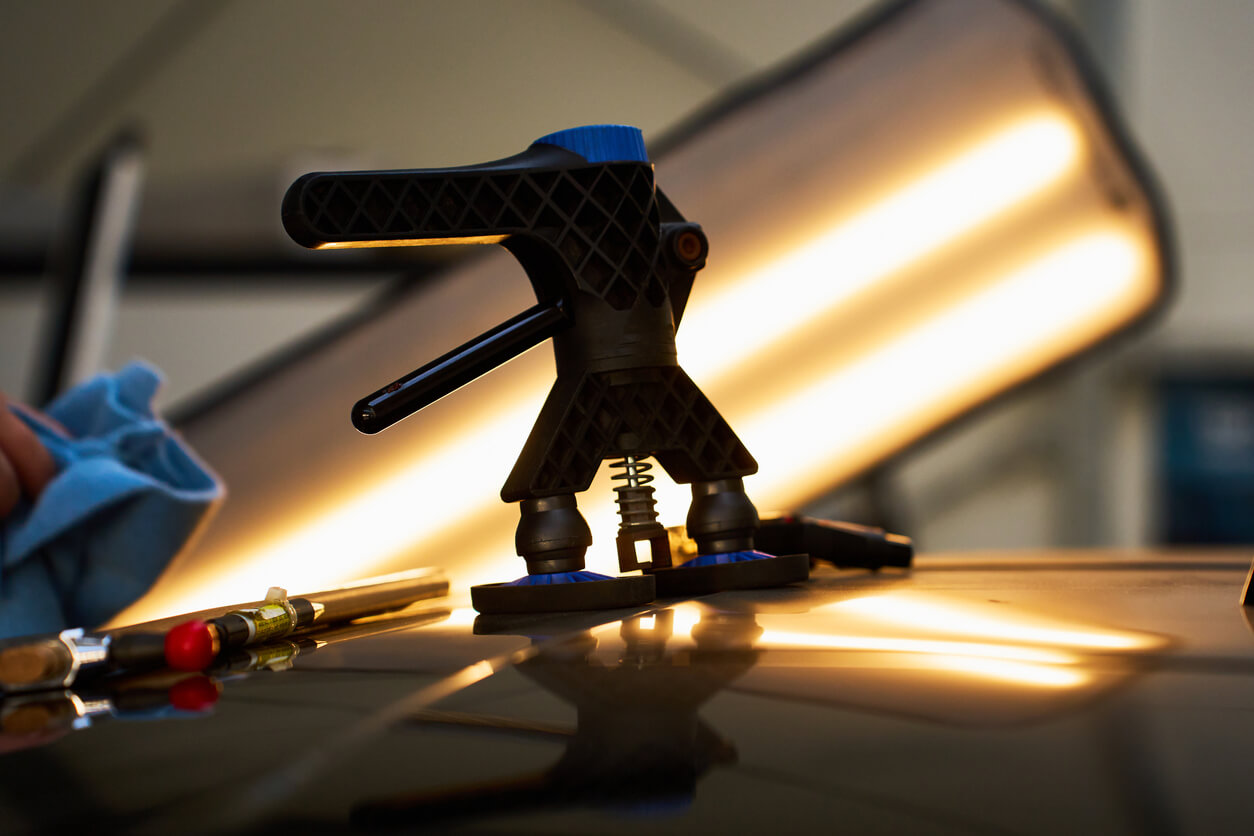
For repairable panels, we use an aluminum panel puller with capacitor‑discharge weld‑on studs or glue‑pulling — never steel dent pullers, which would tear the softer metal. The panel is carefully heated to manufacturer‑specified temperatures to relax the work‑hardened material, then reshaped with specialized hand tools. Because aluminum has no memory, this process requires significant experience to avoid over‑stretching.
3
Aluminum Welding or Rivet Bonding Replacement
If the panel cannot be repaired, we replace it using aluminum welding car techniques (TIG or MIG with 100% argon) or rivet bonding auto repair — whichever the OEM specifies. For many aluminum panels, manufacturers require rivet bonding (adhesive + self‑piercing rivets) instead of welding because it preserves material strength and eliminates heat damage. We use OEM‑specified adhesives, rivets, and curing times to meet factory structural standards.
4
Corrosion Protection, Paint Matching & Quality Verification
After the panel is securely attached, we apply OEM‑specified corrosion inhibitors, seam sealers, and primer to prevent oxidation. Painting aluminum requires different heat settings than steel

How much do our services cost?

Pricing
Every repair is different. The final cost depends on your vehicle’s make and model, the extent of damage, parts required, and whether calibration or refinishing is needed. We provide a free, written estimate before any work begins — no surprises, no hidden fees. Most repairs are covered by insurance, and we handle the paperwork for you. Contact us for a personalized quote. We work with all major insurance carriers and offer flexible payment options.
$150+

Our reviews

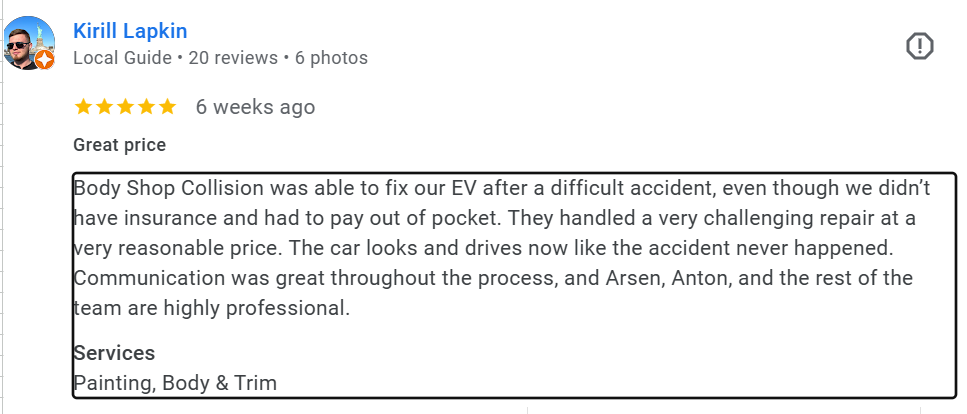
Gallery Image
Gallery Image
Gallery Image
Gallery Image
Gallery Image

Frequently Asked Questions About Aluminum Auto Body Repair

Can any auto body shop repair aluminum car bodies?

No. Aluminum requires specialized equipment, dedicated clean zones, and factory‑trained technicians. After a record hailstorm in Colorado Springs, an estimated 60% of shops declined aluminum repair work, leaving thousands of drivers stranded. Always choose a certified aluminum collision repair facility.

Is aluminum auto body repair more expensive than steel?

Yes, generally. Aluminum auto body repair cost is higher due to specialized tools, certified labor, and OEM parts. Minor dent repair runs $500–800, while full panel replacement can exceed $2,000–4,000. Insurance typically covers aluminum repairs under your collision policy, and we help file claims.

What’s the difference between aluminum welding and rivet bonding?

Aluminum welding car repair uses TIG or MIG welding — but aluminum is heat‑sensitive, and welding can weaken the metal if done incorrectly. Rivet bonding auto repair combines structural adhesive with self‑piercing rivets, creating a strong, corrosion‑resistant joint without heat damage. Many OEMs (including Ford and Tesla) specify rivet bonding for certain aluminum panels.

How do I find an aluminum body repair shop in Los Angeles?

Look for a shop with manufacturer certifications (Ford, Tesla, BMW, Mercedes‑Benz, etc.), dedicated aluminum repair zones, and OEM parts usage. We hold 34+ manufacturer certifications and maintain fully segregated aluminum workspaces.

Can you repair an aluminum frame after a collision?

Yes — aluminum frame repair is possible, but only when following OEM structural repair procedures. For severe damage, the frame section may need to be replaced entirely using factory‑approved rivet bonding or welding. We never attempt “shortcut” repairs that compromise safety.

Do you need to recalibrate ADAS after aluminum body repair?

Absolutely. Many aluminum panels house radar sensors, cameras, and ultrasonic parking sensors. After any repair affecting these components — even a simple fender replacement — we perform full ADAS calibration to ensure lane departure warnings, automatic braking, and blind spot monitoring work correctly.