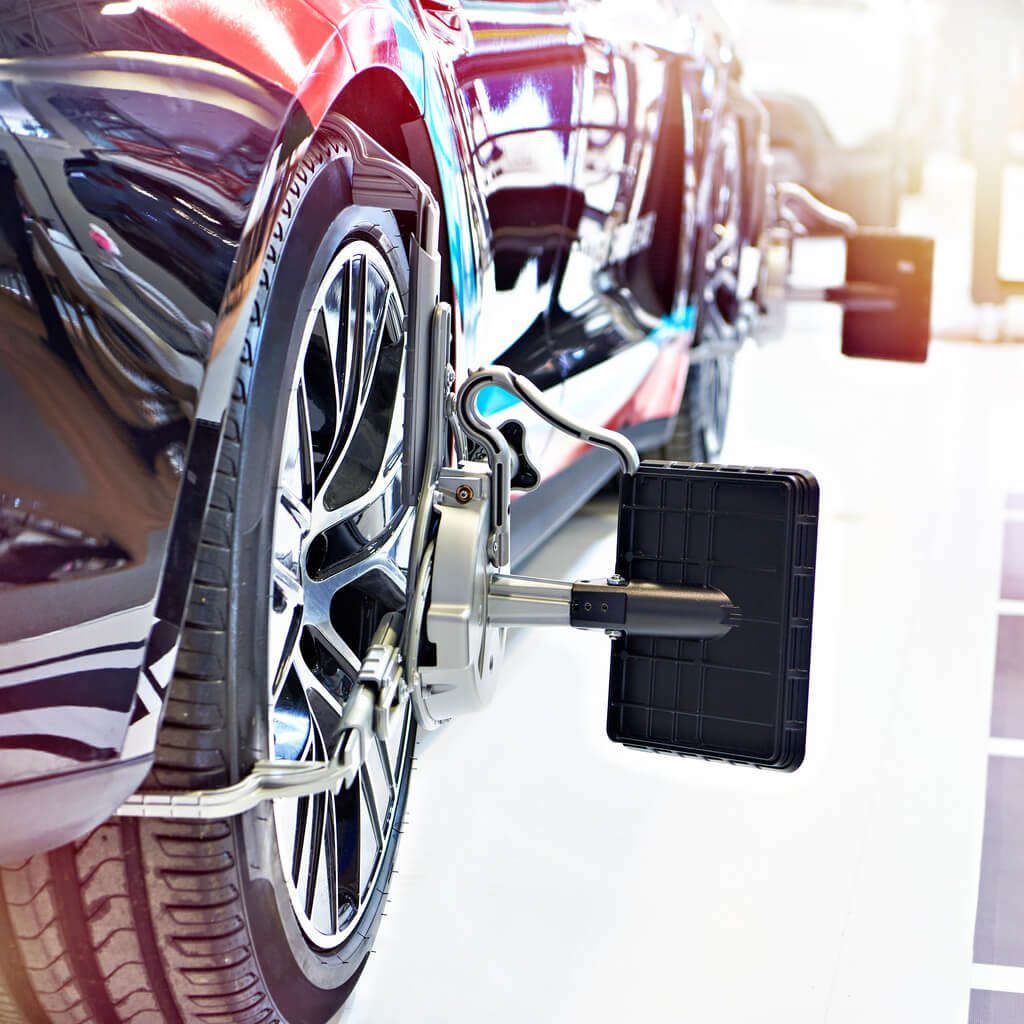
Wheel alignment (sometimes called “tracking”) is the adjustment of your vehicle’s suspension angles — not the wheels themselves. The three primary angles are toe (inward or outward pointing), camber (vertical tilt), and caster (steering axis angle). When these angles are out of specification, your car may pull, vibrate, or wear tires unevenly. Alignment is distinct from wheel balancing (which corrects weight distribution around the wheel and tire assembly). You need both services for a smooth, safe ride.
Why proper alignment matters:
Extends tire life – Misalignment causes inner or outer edge wear, reducing tire life by up to 50%.
Improves fuel economy – Dragging or scrubbing tires increase rolling resistance.
Enhances handling – A straight‑tracking car is safer and less fatiguing to drive.
Prevents suspension damage – Correct angles reduce stress on ball joints, tie rods, and bushings.
Restores after collisions – Even minor impacts can throw alignment off.
Common symptoms of misalignment:
Vehicle pulls to one side on a straight, flat road
Steering wheel is off‑center when driving straight
Uneven or rapid tire wear (one edge worn more than the middle)
Vibration in the steering wheel or seat
Crooked steering wheel after hitting a curb or pothole
Manufacturers typically recommend an alignment check every 6,000–10,000 miles, or annually. However, you should also have your alignment checked after any collision, after replacing suspension components, or immediately when you notice uneven tire wear or pulling.

For most passenger cars with independent rear suspension, 4 wheel alignment costs $100–$160. Front alignment cost for solid rear axle vehicles (trucks, vans) is $80–$120. Luxury or performance vehicles may be slightly higher. We give firm, written estimates upfront.
Most manufacturers recommend an alignment check every 6,000–10,000 miles or at least once a year. However, you should also get an alignment after hitting a large pothot or curb, after any collision, when replacing tires, or immediately if you notice pulling or uneven wear.
The steering angle sensor measures the position of your steering wheel and communicates with stability control and traction control systems. After an alignment, the sensor may still think the wheel is off‑center, causing warning lights or stability intervention. A reset recalibrates the sensor to the new center position. We include this reset whenever alignment adjustments affect steering angle.
Yes. Post collision wheel alignment is critical after any accident that affects suspension, steering, or chassis. Even a minor curb impact can throw alignment off. We measure your vehicle against OEM specifications, make corrections, and also perform any needed steering angle sensor reset and ADAS calibration.
We offer full tire services – mounting, computer balancing, rotation, puncture repair (for repairable tread areas), and TPMS reset. We also sell and install tires from major brands and can price‑match national chains. All work is backed by a road test and warranty.
A standard 4 wheel alignment typically takes 45–90 minutes, depending on whether adjustments require freeing seized components. Adding tire mounting, balancing, or rotation may extend the visit by 30–60 minutes. We provide a time estimate when you drop off your vehicle.